
PBW Explained: How Powdered Brewery Wash Cleans Brewing Equipment
Good brewing starts with clean equipment. That sounds dull until you have stared at a fermenter coated in krausen, a kettle with scorched protein on the bottom, or a bottle covered in glue that refuses to shift.
The quiet truth of brewing is that cleaning comes before creativity. Before the hops, yeast, malt bill, water profile, dry hop schedule, and fermentation plan, there is the basic question every brewer has to answer: is the gear actually clean?
That is where Powdered Brewery Wash, usually called PBW, earns its reputation. PBW is a brewery cleaner made by Five Star Chemicals and widely used by homebrewers because it removes organic brewing grime with far less scrubbing than ordinary dish soap, hot water, or wishful thinking.
It is especially useful for the soils that brewing creates: dried krausen, yeast residue, hop resin, kettle trub, protein film, caramelized wort, sticky bottle labels, and the thin film that clings to plastics and stainless steel after fermentation.
PBW is powerful, but it is often misunderstood. It is a cleaner. It is not a sanitizer. It does not replace proper homebrew sanitizer. It is also not the same thing as an acid beerstone remover. Used properly, it gives you the clean surface you need before sanitizing. Used lazily, it can leave residue, waste money, or give a brewer a false sense of security.
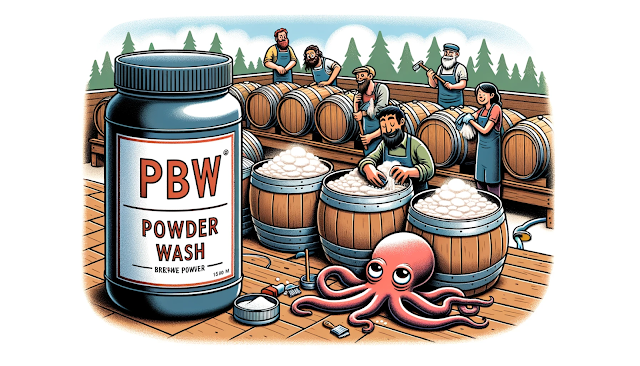
The Simple Version: What PBW Does
PBW removes brewing soil. That means it targets the physical mess left behind after brewing and fermentation.
- Dried krausen rings.
- Yeast residue.
- Hop resin and hop debris.
- Protein film from wort.
- Trub stuck to kettle bottoms.
- Caramelized sugars and scorched wort.
- Sticky bottle label adhesive.
- General organic film inside fermenters, kegs, and hoses.
PBW does this by combining alkaline cleaning power, oxygen-based cleaning action, water conditioning, and detergency. In plain English, it loosens, breaks apart, lifts, and suspends grime so it can be rinsed away.
The Key Distinction
PBW cleans surfaces. A sanitizer sanitizes clean surfaces. If the surface is still dirty, sanitizer cannot do its job properly. If the surface is clean but not sanitized, cold-side equipment can still infect beer.
PBW at a Glance
| Question | Practical answer |
|---|---|
| What is PBW? | A powdered alkaline brewery cleaner used to remove organic brewing soil. |
| What is it best at? | Krausen, yeast residue, protein film, hop resin, trub, bottle labels, and sticky organic grime. |
| Is it a sanitizer? | No. It must be followed by a sanitizer on cold-side equipment. |
| Does it work in cold water? | It works best in warm to hot water. Cold water greatly reduces performance. |
| Does it need rinsing? | Yes. PBW must be rinsed away before brewing or sanitizing. |
| Can it remove beerstone? | It may help prevent some mineral buildup as part of routine cleaning, but established beerstone usually needs an acid cleaner. |
The Professional Assessment: PBW’s Strengths and Weaknesses
PBW deserves its reputation, but the cleaner is stronger when described honestly. It is excellent at organic soil removal. It is easy to use. It saves scrubbing. It is safer for homebrewers than raw caustic soda. It is also more expensive than some substitutes and it does not sanitize.
The Advantages
- Strong organic cleaning: PBW is very good at removing dried krausen, yeast film, hop residue, kettle grime, and protein deposits.
- Less scrubbing: Soaking does most of the work. This helps protect plastic fermenters and soft surfaces from scratches.
- Useful across equipment types: It works well on stainless steel, glass, many plastics, tubing, kegs, fermenters, airlocks, and bottles when used according to directions.
- Good for hard-to-reach areas: Soaks and circulation can clean corners, threads, tubing, keg posts, and awkward vessel geometry better than hand scrubbing alone.
- Helpful in hard water: PBW contains components that help it perform better than simple oxygen cleaners in many water conditions.
The Limitations
- It is not cheap: PBW costs more than generic oxygen cleaners or homemade mixes.
- It prefers heat: Warm to hot water makes it work far better than cold water.
- It must be rinsed: Leftover alkaline cleaner can leave film, foam, or flavor problems.
- It does not sanitize: PBW is not a replacement for Star San or another proper sanitizer.
- It is not a full acid cleaning program: Established beerstone and mineral scale usually need an acid cleaner, especially in hard water systems.
How PBW Cleans: The Chemistry Without the Fog
PBW works because it attacks brewing grime from several angles at once. Brewing soil is not just one thing. It is a mix of sugars, proteins, yeast cells, hop oils, resins, minerals, and sticky biofilm-like residues. A weak cleaner might remove one part and leave the rest behind.
PBW’s value is that it combines different cleaning functions in one product. The exact formulation is proprietary, so brewers should avoid pretending they know every detail of the recipe. But the general cleaning principles are clear: alkalinity, oxygen release, water conditioning, and soil suspension.
Alkalinity Breaks Down Organic Soil
Brewing leaves behind organic mess. Krausen rings contain proteins, yeast, polyphenols, hop compounds, and dried foam residues. Kettle bottoms collect trub, scorched wort, and caramelized sugars. Fermenters develop a film that looks thin but can hold odor and microbes if left alone.
An alkaline cleaner raises pH and helps break the bond between these soils and the equipment surface. This is why PBW can lift grime that plain water cannot touch.
Alkalinity also helps with fat-like and oily residues. Hop oils and resins do not behave like simple sugar. They cling. They smear. They need chemistry that can cut through them.
Oxygen Cleaning Lifts and Loosens Residue
Many brewers know oxygen cleaners through sodium percarbonate. When sodium percarbonate dissolves in water, it releases oxygen-based cleaning action that helps break down stains and organic residue.
This is one reason hot PBW solution often appears to work almost by itself. It is not magic. The cleaner is dissolving, loosening, lifting, and suspending material while the brewer does something more useful than scratching a fermenter with a sponge.
Water Conditioning Helps the Cleaner Work
Hard water can reduce cleaning performance. Calcium and magnesium can interfere with detergents and contribute to deposits on brewing equipment. Better brewery cleaners include ingredients that help manage those minerals so the cleaning ingredients can stay active.
This is one of the areas where PBW usually performs better than a basic household oxygen cleaner. A generic product may lift some grime, but it may also leave haze or mineral film, especially in hard water.
Detergency Keeps Soil Suspended
Removing soil is only half the job. The cleaner also needs to keep loosened material suspended in solution so it does not simply redeposit somewhere else.
This matters in kegs, fermenters, and draft lines. Once krausen, hop resin, yeast film, or dried beer residue has been lifted, it needs to stay in the cleaning solution long enough to be drained and rinsed away.
The OxiClean and TSP Substitute Question
Many homebrewers try to make a cheaper PBW-style cleaner using unscented oxygen cleaner and a TSP substitute. That kind of blend can clean some brewing soils, and many brewers have used it with acceptable results on lightly soiled gear.
The problem is consistency. Household cleaners are not always designed for brewing equipment. They may contain perfumes, surfactants, fillers, blue crystals, or additives you do not want near beer. Their formulas can also change without notice.
The bigger issue is water chemistry. In hard water, DIY oxygen cleaner mixes can leave cloudy residue or mineral haze. They may clean organic matter but still leave deposits that require more work later.
Practical Take
DIY cleaner mixes can be useful for low-risk jobs such as label removal or rough cleaning old bottles. For fermenters, kegs, draft lines, and anything that touches finished beer, true PBW is usually the safer and more repeatable choice.
PBW, Beerstone, and Mineral Scale
PBW is mainly an alkaline cleaner. Its main strength is removing organic brewing soil. That means yeast, protein, hop resin, trub, sticky residue, and film. Beerstone is different.
Beerstone is mostly calcium oxalate, a mineral deposit created when calcium reacts with oxalate from malt. It often appears as a white, grey, tan, yellow, or brownish film. It feels chalky or rough, and it can survive normal alkaline cleaning.
PBW can help reduce the conditions that allow beerstone to build up because it removes organic residues and helps manage some water hardness issues. But if beerstone is already established, you usually need an acid cleaner or dedicated beerstone remover.
This matters because many brewers keep increasing PBW concentration when the real problem is mineral scale. If the vessel is clean but still has a chalky rough film, stop treating it like krausen. Use the correct acid cleaning step, then rinse and sanitize before use.
How to Use PBW Properly
PBW is simple to use, but there are three variables that matter: dosage, temperature, and time.
1. Rinse first
Do not dump PBW straight onto a pile of trub and expect miracles. Rinse loose soil first. Remove yeast sludge, hop matter, and leftover beer or wort. The less bulk soil in the vessel, the better the cleaner can attack the film that remains.
2. Use the right concentration
For routine cleaning, many brewers use around 1 ounce per gallon of water. For heavy soil, scorched kettles, dried krausen, or neglected gear, stronger solutions may be needed. Always follow the product label for your specific use case.
3. Use warm to hot water
PBW works best in warm to hot water. A common practical range is roughly 120°F to 160°F, or 49°C to 71°C. Very hot water improves performance, but it also increases burn risk and can damage some plastics if taken too far.
4. Give it time
For light soil, 20 to 30 minutes may be enough. For dried krausen or stubborn kettle deposits, longer soaks are better. Overnight soaking can work well for fermenters, bottles, and heavy residue, provided the material is compatible with extended contact.
5. Agitate or circulate when useful
Soaking works, but movement improves cleaning. Swirl vessels, recirculate through lines, pump through a keg washer, or rotate parts in the solution. Contact matters.
6. Rinse completely
PBW must be rinsed. Use clean water and rinse until the slick alkaline feel is gone. If the equipment still feels slippery, keep rinsing.
7. Sanitize before use
Once the equipment is clean and rinsed, sanitize anything that will touch cooled wort or finished beer. Cleaning prepares the surface. Sanitizing protects the beer.
PBW Dosage and Use Guide
Exact dosage should follow the product label, but this table gives a useful working guide for common homebrew jobs.
| Cleaning job | Suggested approach | Important notes |
|---|---|---|
| Lightly soiled fermenter | Warm PBW soak for 20 to 30 minutes. | Rinse first to remove loose yeast and beer residue. |
| Dried krausen ring | Hot PBW soak for several hours or overnight. | Avoid abrasive scrubbing on plastic fermenters. |
| Boil kettle with trub or protein film | Hot soak, then soft wipe and rinse. | For scorched residue, longer contact time is better than harder scrubbing. |
| Keg cleaning | Fill, soak, invert, and run solution through dip tubes. | Disassemble posts and poppets when needed. |
| Draft lines | Circulate warm PBW solution, then rinse thoroughly. | Follow with an appropriate line cleaning and sanitation routine. |
| Bottle label removal | Hot PBW soak until labels loosen. | Great for reusable bottles, but rinse glass well after soaking. |
| Small parts | Soak in a parts bucket, then rinse and inspect. | Airlocks, gaskets, disconnects, caps, and tubing collect hidden residue. |
Cleaning Fermenters with PBW
Fermenters are where PBW earns its keep. Krausen can dry into a stubborn ring, especially after vigorous fermentation, wheat-heavy beers, high-protein wort, dry hopping, or delayed cleaning.
Start by rinsing out loose yeast and beer. Add warm PBW solution and fill above the krausen line. Let it soak. In many cases, the ring will soften and slide away with a gentle cloth wipe.
Plastic fermenters need special care. Scratches create hiding places for microbes. A fermenter that has been scoured aggressively may look clean but be harder to sanitize. Let the cleaner do the work.
For stainless fermenters, PBW is excellent for routine organic cleaning. Pay attention to valves, sample ports, thermowells, lids, gaskets, and racking arms. These small components often hold residue long after the main vessel wall looks clean.
Cleaning Kettles with PBW
Kettles collect hot break, hop resin, trub, caramelized wort, and sometimes scorched material. A fast rinse after the boil helps enormously. If kettle soil dries overnight, the job becomes much harder.
For normal kettle cleaning, rinse out hop matter and trub, add hot PBW solution, soak, then wipe with a soft cloth or brewery-safe pad. Rinse thoroughly.
If there is a chalky mineral film after cleaning, that may be hard water scale or beerstone, not ordinary kettle grime. PBW may not remove it fully. Use an acid cleaner where appropriate.
Cleaning Kegs and Draft Gear
Kegs are easy to underestimate because they look simple from the outside. Inside, they can hold beer film, yeast sediment, hop residue, mineral scale, and dried foam. The dip tubes, posts, and poppets are usually the worst areas.
To clean a keg properly, rinse it first. Fill with warm PBW solution. Let it soak, then push or pump solution through the liquid and gas posts. This cleans the dip tubes and internal pathways, not just the keg walls.
Break down posts and poppets periodically. Soak them in PBW, rinse, inspect, then sanitize before use. Replace old O-rings if they hold odor or show wear.
Draft lines can also be cleaned with PBW in some homebrew setups, but beer lines often need dedicated line cleaning as well. PBW is useful for organic soil, but line maintenance should include the right cleaner for the specific deposits you are trying to remove.
Removing Bottle Labels with PBW
PBW is excellent for label removal. If you are struggling with sticky commercial beer bottle labels, soak the bottles in hot PBW solution. Many paper labels loosen and float away, while the adhesive softens enough to wipe off.
Some labels are still stubborn, especially plastic labels, foil labels, waterproof labels, and aggressive modern adhesives. For those, longer soaking may help, but some bottles are not worth the effort.
After label removal, rinse bottles thoroughly. PBW residue left inside bottles can cause foam, slickness, or unwanted chemical carryover.
The Parts Bucket Method
Every brewer should have a parts bucket. Small brewing parts are easy to lose, easy to neglect, and often responsible for recurring contamination problems.
Add warm PBW solution to a small bucket and soak:
- Airlocks.
- Bungs.
- Silicone tubing.
- Ball lock disconnects.
- Keg posts.
- Poppets.
- Dip tube brushes.
- Tap parts.
- Tri clamp gaskets.
- Bottling wands.
- Auto siphon parts.
- Fermenter valves.
After soaking, rinse everything well and inspect it. If tubing is stained, cloudy, stiff, scratched, or carrying old beer smell, replacement is usually smarter than heroic cleaning.
Cleaning Is Not Sanitizing
This is the rule that saves batches. PBW is a cleaner. It removes the dirt that microbes hide in. It does not reliably sanitize brewing equipment.
After cleaning and rinsing, any equipment that touches cooled wort or finished beer must be sanitized. That includes fermenters, lids, stoppers, airlocks, hoses, siphons, bottling wands, keg parts, and packaging gear.
The Cold-Side Rule
Everything that touches beer after the boil must be cleaned first and sanitized immediately before use. A clean fermenter is not automatically a sanitized fermenter.
An acid-based no-rinse sanitizer such as Star San is commonly used after cleaning. The surface must already be clean. If organic soil remains, sanitizer wastes its chemical action on grime and may not reach the microbes underneath.
PBW and Star San: Different Jobs
PBW and Star San are often mentioned together because they solve different parts of the same brewing problem.
| Product type | Main job | When to use | What it does not do |
|---|---|---|---|
| PBW | Cleans brewing soil. | After brewing, fermentation, kegging, or bottling. | It does not replace sanitizer. |
| Star San | Sanitizes clean surfaces. | Immediately before cold-side contact. | It does not clean dirty equipment. |
| Acid beerstone remover | Removes mineral scale and beerstone. | When chalky mineral deposits remain after cleaning. | It does not replace routine organic cleaning. |
Common PBW Mistakes
- Using cold water and expecting the cleaner to perform at full strength.
- Adding too little cleaner to a heavily soiled vessel.
- Not giving the solution enough contact time.
- Failing to rinse before using PBW, leaving the cleaner to fight unnecessary bulk soil.
- Failing to rinse after using PBW, leaving alkaline residue behind.
- Using PBW as if it were a sanitizer.
- Assuming PBW will remove every mineral deposit.
- Scrubbing plastic fermenters aggressively instead of soaking.
- Neglecting valves, tubing, keg posts, and small fittings.
- Using scented household oxygen cleaners near brewing equipment.
Safety When Using PBW
PBW is safer for homebrewers than raw caustic cleaners, but it still deserves careful handling. It is alkaline, it can irritate skin and eyes, and hot cleaning solution can burn.
- Wear gloves when mixing or handling strong cleaning solutions.
- Avoid splashing PBW solution into your eyes.
- Do not breathe powder dust when measuring.
- Use hot water carefully.
- Keep the cleaner away from children and pets.
- Label any cleaning buckets clearly.
- Do not mix PBW with acid cleaners or sanitizer.
- Rinse equipment thoroughly after cleaning.
A Practical Cleaning Workflow
The easiest way to use PBW well is to build it into a repeatable routine.
After brew day
Rinse the kettle while it is still fresh. Remove trub and hop matter. Soak with warm PBW solution if protein or sugar residue remains. Rinse clean.
After fermentation
Empty the fermenter and rinse yeast sediment before it dries. Fill above the krausen line with warm PBW solution. Soak until the ring softens. Wipe gently and rinse.
Before packaging
Clean bottles, kegs, siphons, tubing, and bottling gear. Rinse completely. Then sanitize anything that touches finished beer.
After serving
Clean kegs and lines before old beer dries inside them. Push cleaning solution through dip tubes and posts. Rinse thoroughly. Store dry where possible.
Periodic deep cleaning
Disassemble valves, keg posts, taps, and small parts. Soak them in PBW. Inspect for wear, residue, and odor. Replace parts that cannot be cleaned properly.
PBW Cleaning Checklist
- Rinse loose soil before using PBW.
- Use warm to hot water for best performance.
- Measure the cleaner instead of guessing.
- Give heavy soil enough soak time.
- Use circulation for kegs, lines, and hard-to-reach areas.
- Disassemble small parts regularly.
- Rinse until the slippery feel is gone.
- Use acid cleaner if chalky mineral scale remains.
- Sanitize cold-side equipment after cleaning.
- Store cleaned equipment dry where possible.
When PBW Is Worth the Money
PBW costs more than improvised cleaners, so it makes sense to use it where it matters most. It is especially worthwhile for fermenters, kegs, valves, tubing, draft equipment, heavily soiled kettles, and any gear that is difficult to scrub safely.
For low-risk jobs such as rough label removal, some brewers use cheaper oxygen cleaners. That can be fine if the product is unscented and rinses clean. But for core brewing equipment, especially anything touching cooled wort or beer, repeatability matters.
That is the real value of PBW. It is not only strong. It is predictable. A predictable cleaning routine removes one of the biggest sources of brewing failure.
The Clean Surface Is the Starting Point
PBW will not make a bad recipe good. It will not fix poor fermentation temperature. It will not rescue oxidized beer. But it does solve one of brewing’s most common problems: dirty gear that looks cleaner than it really is.
Use it with hot water. Give it time. Rinse thoroughly. Follow it with a proper sanitizer. Treat mineral deposits separately when needed. Do that, and PBW becomes more than another chemical on the shelf. It becomes part of the basic discipline that keeps beer clean, stable, and worth drinking.
Always follow the directions printed on the cleaner, sanitizer, or acid wash you are using. Check material compatibility before soaking soft metals, plastics, rubber, painted surfaces, or anything with manufacturer-specific care instructions.


