How to Carbonate Home Brewed Beer

Tuesday, October 7, 2025

There's no feeling quite like it: the satisfying psst as you open a bottle of your own homebrew, the gentle hiss as you pour it into a glass, and the sight of a perfect, stable head crowning your creation. That fizz, that sparkle, that lively tingle on your tongue - that's carbonation.

And getting it right is what separates good homebrew from great homebrew.

For many brewers, this final step is a black box filled with anxiety.

Will it be flat?

Will I create dangerous "bottle bombs"?

How do I even start with kegging?

Relax.

This guide will demystify the entire process. We'll explore the science of how beer gets its bubbles, then walk you through the two primary methods: the classic art of bottle conditioning and the powerful upgrade of kegging. By the end, you'll have the confidence to achieve perfect carbonation, every single time.

how to carbonate home brew beer

The Two Paths to Carbonation

Kegging vs. Bottle Conditioning: A Quick Comparison

Feature Bottle Conditioning Kegging (Force Carbonation)
Time to Drink2-4 weeks24 hours to 1 week
Initial CostLowHigh
EffortHigh on bottling dayLow
ConsistencyVariableVery Consistent
ClarityYeast sediment presentCrystal-clear possible
PortabilityExcellentChallenging

The Science of Fizz: What is Carbonation?

Getting CO2 into your beer is a dance between temperature and pressure, governed by a scientific principle called Henry's Law. In simple terms, it states that the amount of a gas (like CO2) that can dissolve in a liquid (like beer) is directly proportional to the pressure of that gas over the liquid.

 Colder liquids can also hold more dissolved gas.

We measure carbonation in "Volumes of CO2." One volume of CO2 is one liter of carbon dioxide gas dissolved in one liter of beer. Different beer styles have different target carbonation levels:

  • British Ales (Cask Ale): 1.5 - 2.0 Vols
  • American Pale Ales & IPAs: 2.2 - 2.7 Vols
  • German Wheat Beers (Hefeweizen): 3.5 - 4.5 Vols
Method 1: The Classic Art of Bottle Conditioning

This is the traditional, time-honoured way to carbonate beer. It’s how every homebrewer starts, and it’s a craft in its own right.

beer bottling day guide

Step-by-Step Guide to Bottling Day

You can either prime your wort with sugar or use carbonation drops.
  1. Ensure Fermentation is Complete: Use your hydrometer to take a gravity reading. Wait two days and take another. If the reading is identical, your yeast is done, preventing the risk of "bottle bombs."
  2. Calculate Your Priming Sugar: Use a reliable online priming sugar calculator. You'll need your exact batch volume, the highest fermentation temperature, and your target CO2 volume.
  3. Prepare the Sugar Solution: Boil your calculated priming sugar in a cup of water for 5 minutes. This sanitizes it and ensures it will mix evenly into your beer.
  4. Transfer and Mix: Gently pour the cooled sugar solution into a sanitized bottling bucket. Carefully rack your beer on top, allowing the motion to mix everything without splashing.
  5. Fill and Cap: Using a bottling wand, fill your sanitized bottles to about an inch from the top to leave crucial headspace. Cap each one securely.
  6. Wait: Store the bottles in a dark place at room temperature (around 20-22°C / 68-72°F) for at least two weeks for the yeast to naturally carbonate the beer.

Pros of Bottle Conditioning

  • Inexpensive Start: Requires minimal equipment beyond what comes in a starter kit.
  • Highly Portable: It's easy to grab a few bottles to share with friends.
  • Flavor Maturation: Bottle conditioning allows certain beer styles to develop complex flavors over time.

Cons of Bottle Conditioning

  • Time-Consuming: Cleaning, filling, and capping 50 bottles is a significant chore.
  • Yeast Sediment: A layer of yeast (lees) is unavoidable at the bottom of each bottle.
  • Inconsistent Carbonation: It's easy to get slightly different carbonation levels from bottle to bottle.

The Science of Bottle Conditioning

Inside each sealed bottle, a mini-fermentation occurs. The dormant yeast consumes the priming sugar and produces CO2.

With nowhere to go, this gas is forced to dissolve into the beer, creating natural carbonation.

Method 2: The Upgrade to Kegging

Force carbonating is the fast lane to finished beer. By using a tank of CO2, you take direct control of the process, bypassing the yeast entirely.

kegging homebrew beer guide

How to Force Carbonate

There are two primary methods for force carbonating:

  1. The "Set and Forget" Method (1-2 Weeks): This is the easiest and most reliable way. Chill your keg, connect the gas, and set the regulator to your target pressure based on a carbonation chart (below). The beer will slowly absorb the CO2 over a week or two.
  2. The "Burst Carbonate" Method (24-48 Hours): For the impatient brewer. Chill your keg, then apply a much higher pressure (e.g., 30-40 PSI) for 12-24 hours. After this period, you must vent the excess pressure and turn the regulator down to your target serving pressure (usually 10-12 PSI).

Pros of Kegging

  • Extremely Fast: Go from fermented beer to a carbonated pint in as little as 24 hours.
  • Precise Control: You can dial in the exact carbonation level for any beer style.
  • No Sediment: Beer served from a keg is crystal clear, with no yeast at the bottom of your glass.

Cons of Kegging

  • High Initial Cost: Kegs, a CO2 tank, regulator, and a fridge or kegerator are a significant investment.
  • Requires Space: You need a dedicated fridge or chest freezer for your keg setup.
  • Potential for Gas Leaks: A poorly sealed connection can drain your CO2 tank overnight.

Force Carbonation Chart (PSI)

Use this chart for the "Set and Forget" method. Find your kegerator's temperature and your target CO2 volume to determine the correct PSI setting.

Temp (°F/°C) 2.2 Vols 2.4 Vols 2.6 Vols
38°F / 3°C9.411.714.1
40°F / 4°C10.312.715.1
42°F / 6°C11.213.716.2
Frequently Asked Questions

beer carbonation science explained

How long should I store my bottle-conditioned beer before drinking?

The baseline is two weeks at room temperature for the yeast to carbonate, followed by at least 48 hours in the fridge.

Many beers, especially bigger, darker styles, will continue to mature and improve in the bottle for months.

Can I re-carbonate flat beer?

In bottles, it's very difficult. In a keg, however, it's incredibly easy! Simply reconnect your gas line, check for leaks, and re-apply pressure using the "Set and Forget" method.

What's the best way to store my carbonated homebrew?

Once carbonation + conditioning is complete, cold is king. Store all your beer, whether in bottles or a keg, in a cool place - or even the refrigerator to preserve the fresh flavours and slow down staling.

What is this layer of gunk at the bottom of my bottle?

That is the yeast sediment, or "lees," and it's a completely normal part of bottle conditioning. Pour carefully into a glass, leaving the last half-inch of liquid and the yeast behind in the bottle.

Help, my bottles are gushing foam! How do I fix over-carbonation?

This is usually caused by too much priming sugar or bottling before fermentation was finished. Get all the bottles into the fridge immediately. To salvage the beer, carefully open each bottle to vent some pressure before re-capping it. You may need to do this a few times over a few days.

It could also be an infected beer batch. You'll need to do a taste and smell test.

Can I use table sugar or honey to prime my beer?

Yes, but be precise. Table sugar (sucrose) is slightly more fermentable than corn sugar (dextrose), so you'll need about 10% less. Honey and maple syrup also work but can add their own flavours and can give the beer a drier taste / mouthfeel. For consistent results, sticking to dextrose is recommended for beginners.

Beer Kit Brewer: Beginner's Guide to Brewing Beer from a Kit

Monday, October 6, 2025

Welcome to the world of homebrewing! You're about to turn water, grain, hops, and yeast into something magical. T

his guide is your trusted co-pilot, designed to walk you through your inaugural batch of beer using a simple, no-boil beer kit

We're going to skip the complex, all-grain science for now and focus on the fundamental skills that will guarantee a delicious, successful first brew.

Think of this as Brewing 101. Follow these steps, embrace the process, and you'll be enjoying your very own handcrafted beer in just a few weeks. Let's get that first brew bottled!

beer kit brew guide

Part 1: The Foundation — Preparation & The Golden Rule

The Golden Rule: You Are a Janitor First, a Brewer Second

This is the most important lesson in all of brewing. Your sugary wort is a perfect petri dish for microscopic invaders - wild yeast and bacteria - that will turn your beer sour and undrinkable. 

You are not just brewing beer; you are creating a pristine environment where only your chosen yeast can thrive. 

In brewing, cleanliness is not just a virtue; it is a necessity.

The Science of Sanitation

It's crucial to understand the difference: Cleaning removes visible dirt and grime (soil). Sanitizing eliminates invisible microorganisms. You must clean your equipment thoroughly before you sanitize it. 

Use a no-rinse sanitizer like Star San

It works by creating a highly acidic environment that ruptures the cell walls of bacteria and wild yeast, killing them on contact. 

If a piece of equipment touches your beer after the boil, it must be sanitized. No exceptions. You do not want to brew an infected beer

The tears this author has spilt over dumped batches could fill a keg.

Part 2: Brew Day — From Can to Fermenter

The Brewer's Protocol: A Step-by-Step Guide

This is the moment! Read your specific kit's instructions, but the process is generally universal. Let's begin.

Beer Kit Brewer: Beginner's Guide to Brewing Beer from a Kit
  1. Prepare the Malt Extract: The thick malt extract in the can is easier to pour when warm. Place the unopened can in a sink of hot water for 10-15 minutes. This lowers its viscosity, ensuring you get every last drop of sugary goodness.
  2. Mix the Wort: Pour about 2 gallons of hot (not boiling) water into your sanitized fermenter. Open the can of malt extract and pour it in. Use a sanitized spatula to scrape the can clean. Add any additional sugars your kit recommends (like dextrose or dry malt extract). Stir vigorously with your sanitized long spoon until all the extract and sugars are completely dissolved. This sugar-rich liquid is now called "wort."
  3. Top Up and Aerate: Add cold, fresh water to the fermenter until you reach your target volume (usually 5 gallons or 23 liters). As you add the final gallon, let it splash! This is the ONE time you want to introduce oxygen into your beer. Yeast needs oxygen for its initial growth phase to build healthy cell walls.
  4. Check Temperature & Pitch Yeast: Use your sanitized thermometer to check the wort's temperature. It MUST be between 65-75°F (18-24°C). If it's too warm, wait. Pitching yeast into hot wort will kill it. Once in the correct range, open your yeast packet and sprinkle it evenly across the surface of the wort.
  5. Seal and Store: Securely fasten the lid on your fermenter. Insert your airlock (filled to the line with sanitizer) into the rubber stopper. Place the fermenter in a dark place that maintains a stable temperature, like a closet or basement.
Part 3: The Magic of Fermentation

Patience is a Virtue: Let the Yeast Do the Work

brewers guide to beer kit cans 101

For the next 1-2 weeks, your job is to be a patient observer. Within 24-72 hours, you'll see signs of fermentation: vigorous bubbling in the airlock and a thick, frothy layer called a krausen on top of your beer.

The Science of Fermentation

Inside that dark bucket, a metabolic miracle is occurring. The yeast cells are consuming the simple sugars (glucose, maltose) in your wort. 

Through an anaerobic process, they convert each sugar molecule into two molecules of ethanol (alcohol) and two molecules of carbon dioxide (the bubbles). 

At the same time, they produce a symphony of other compounds, primarily esters, which contribute the fruity or spicy notes that define an ale.

 Temperature control is key here; a stable 68°F (20°C) will result in a clean fermentation with balanced flavors.

Confirming Completion: Trust the Hydrometer, Not the Bubbles

After about a week, the bubbling will slow down or stop. This DOES NOT mean it's finished. The only way to know for sure is to take a gravity reading with your hydrometer. 

Take a reading. 

Wait two days. 

Take another. 

If the reading is stable, fermentation is complete.

Part 4: The Final Step — Bottling and Conditioning

Creating Carbonation and Maturing Your Beer

  1. Sanitize Everything Again: Bottles, caps, siphon, bottling wand—everything.
  2. Prime Your Beer: To carbonate your beer, you need to add a small, measured amount of sugar. Boil about 2/3 cup of corn sugar (dextrose) in two cups of water. Gently add this cooled syrup to your sanitized bottling bucket.
  3. Transfer and Fill: Carefully siphon the beer from the fermenter into the bottling bucket, leaving the sediment behind. The gentle motion will mix the sugar. Attach your bottling wand and fill each bottle, leaving about one inch of headspace.
  4. Cap and Condition: Cap each bottle securely. Store the bottles in a dark place at room temperature for at least two weeks.

The Science of Bottle Conditioning

Inside each sealed bottle, a mini-fermentation occurs. The dormant yeast wakes up, consumes the priming sugar, and produces a small amount of CO2. 

With nowhere to go, this CO2 is forced to dissolve into the beer, creating carbonation. 

This conditioning period is also crucial for flavor maturation, allowing harsh notes to mellow and complex flavors to meld together.

The Reward

Finally, the moment you've been waiting for. After at least two weeks, chill a bottle thoroughly in the fridge. 

Pour it into a proper glass (you've earned it!) and savor the fruits of your labor. 

Pay attention to the aroma, the creamy head, and the taste. Each element is a testament to the care you've invested. 

It might not be perfect, but it's yours. 

The Ultimate Guide to Yeast Nutrients for brewing beers

Yeast is a remarkable microorganism, the microscopic workhorse that transforms sugary wort into glorious beer. 

For centuries, brewers relied on instinct and tradition, unknowingly providing for their yeast. 

It wasn't until the pioneering work of scientists like Louis Pasteur that we began to understand fermentation not as a mystical event, but as a biological process driven by a living organism with specific needs.

use yeast nutrients making beer wort

While factors like temperature and pH are often discussed, the specific nutritional needs of yeast can be overlooked

This guide will delve into the vital science of yeast nutrition, transforming your understanding from simply pitching yeast to actively managing its health for a better, cleaner, and more consistent fermentation every time.

Part 1: The Science of a Healthy Cell

What Yeast Craves (Beyond Sugar)

An all-malt wort is a fantastic food source, but it isn't always perfect. For yeast to not just survive but thrive, it needs more than just sugar. 

It requires a balanced diet of micronutrients to build healthy cell walls, reproduce efficiently, and cleanly metabolize sugar into alcohol without producing unwanted off-flavors.

The Brewer's Micronutrient Checklist:

  • Nitrogen (FAN): The most critical nutrient. Yeast needs Free Amino Nitrogen (FAN) to synthesize proteins and build new cells. A standard all-malt wort usually has plenty, but worts with high amounts of sugar adjuncts do not.
  • Minerals (Especially Zinc): Zinc is a vital cofactor for key enzymes, including alcohol dehydrogenase, which performs the final step of alcohol production. A lack of zinc can lead to sluggish or stalled fermentations. Magnesium is also crucial for cellular metabolism.
  • Vitamins: B-complex vitamins like biotin and pantothenic acid are essential for healthy cell growth and metabolism.
  • Sterols and Unsaturated Fatty Acids: These are the building blocks of the yeast cell membrane. A strong, pliable membrane is crucial for stress tolerance (especially to alcohol) and proper cell function.

When yeast is stressed due to a lack of these key nutrients, it produces more undesirable compounds like fusel alcohols (hot, solvent-like flavors) and acetaldehyde (a cidery, green-apple flavor), leading to a flawed beer.

Part 2: The Brewer's Diagnostic — When to Use Nutrients

Identifying a Nutrient-Deficient Wort

For many standard-gravity, all-malt beers, adding extra nutrients is not necessary. The malt provides a rich diet. 

However, in certain high-stress situations, nutrients become an essential tool for ensuring a clean and complete fermentation.

Use Nutrients When:

  • Making High-Gravity Beers: A wort with a starting gravity above 1.060 is a high-stress environment. The high sugar concentration (osmotic pressure) and eventual high alcohol level are tough on yeast. Nutrients help build a larger, healthier yeast population that can handle the stress.
  • Using High Proportions of Adjuncts: If your recipe includes a large amount (over 20%) of non-malt sugar sources like corn sugar, table sugar, or honey, you are diluting the wort's nutrient content. These simple sugars provide no FAN or minerals, effectively starving your yeast.
  • Making Yeast Starters: Adding a small amount of nutrient to your yeast starter gives your yeast a perfect environment to build up its population and store the vital compounds it needs for a healthy fermentation in the main batch.
  • Brewing Seltzers, Meads, or Ciders: These fermentations are almost entirely devoid of the nutrients found in malt. For these beverages, yeast nutrient is not just beneficial; it is essential for a successful fermentation.
Part 3: The Brewer's Protocol — Your Guide to Application

Choosing and Using Your Nutrients

There are several types of yeast nutrients available, each with a specific purpose.

Nutrient Types:

  • Simple Nutrients (DAP): Products like di-ammonium phosphate are simple nitrogen supplements. They are effective at providing basic fuel for yeast reproduction.
  • Complex Nutrients: Blends like Fermax or Fermaid K are a brewer's best friend. They contain a balanced mix of nitrogen, amino acids, vitamins, and minerals, providing a complete diet for your yeast.
  • Specialized Nutrients (e.g., Servomyces): Produced by White Labs, Servomyces is a unique product made from yeast that has been enriched with zinc. It provides this critical mineral in a highly bioavailable form, ensuring it gets directly to the yeast cells without any risk of toxicity.

Application Protocol: Timing is Everything

For best results, add your yeast nutrient during the boil.

The Golden Rule: Add 1 teaspoon of a complex yeast nutrient per 5 gallons of wort during the last 10-15 minutes of the boil. This ensures the nutrient is fully dissolved and sanitized before fermentation begins. 

For a product like Servomyces, one capsule added at 10 minutes is all that's needed. If you are brewing a kit beer with no boil, you can add the nutrient directly to the fermenter and stir vigorously to dissolve it before pitching your yeast.

From Brewer to Yeast Rancher

Yeast nutrition might seem like a small detail, but its impact on your final beer is immense. 

By moving beyond just providing sugar and starting to manage the health of your yeast culture, you elevate your brewing from a simple process to a true craft. 

You become a yeast rancher, cultivating a healthy herd to do its best work. 

Whether you're pushing the limits with a high-gravity monster or ensuring a clean ferment in a simple pale ale, understanding the nutritional needs of yeast is a powerful tool in your quest for the perfect pint.

Beerstone: How to remove & prevent it from occurring

Tuesday, September 30, 2025

The Brewer's Guide to Eradicating Beerstone: The Chemistry of Clean

Stop scrubbing blindly. Learn the molecular science of calcium oxalate and how to permanently remove this invisible threat from your brewhouse.

Every brewer, from the weekend amateur in their garage to the head cellarmaster at a commercial facility, is intimately acquainted with the physical toll of equipment maintenance. 

We have all found ourselves shoulder-deep in a stainless steel conical, scrubbing a stubborn, hazy film that simply refuses to wash away.

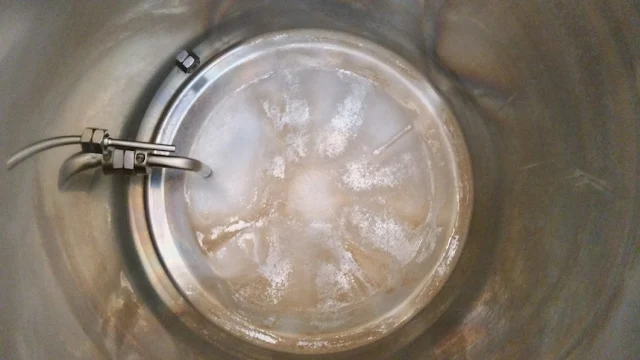
That pesky, milky-white film is beerstone. It is not merely leftover yeast or simple dirt. 

It is a highly organized, crystalline mineral structure that actively compromises the quality of your brew, ruins your heat transfer efficiency, and poses massive hidden sanitation risks.

Let us delve deep into the molecular biology and chemistry of beerstone. 

By understanding exactly how it forms, we can deploy the correct chemical agents to break its bonds and eliminate it from your brewing equipment forever.

'calcium oxalate' - beerstone buildup
Part 1: What is Beerstone? A Molecular Deep Dive

To defeat the enemy, you must first understand it. Beerstone is scientifically classified as calcium oxalate, represented chemically as $CaC_{2}O_{4}$. It presents visually as a milky-white, yellowish, or sometimes brownish scale that stubbornly adheres to the walls of your kettles, heat exchangers, and fermenters over multiple brewing cycles.

This scale is not a single, pure substance. It is a complex, layered matrix. It is primarily composed of precipitated calcium and magnesium salts, but these minerals are physically glued together by sticky organic compounds, specifically denatured proteins and hop resins left over from the boiling process.

The actual formation of beerstone is a classic textbook example of precipitation chemistry. Oxalic acid, or $H_{2}C_{2}O_{4}$, is an organic compound naturally and abundantly present in malted barley. During the mash and the boil, this acid dissolves into the wort. Simultaneously, your brewing water and the malt itself provide a high concentration of free calcium ions ($Ca^{2+}$).

When these two components meet under the specific pH and temperature conditions of the brewhouse, a powerful ionic reaction occurs. The reaction forms calcium oxalate, a salt with incredibly low solubility in water. The standard chemical equation for this precipitation is:

$$Ca^{2+}(aq) + C_{2}O_{4}^{2-}(aq) \rightarrow CaC_{2}O_{4}(s)$$

Once this solid ($s$) precipitates out of the liquid phase, the sticky proteins in the boiling wort act as a biological cement. They bind the calcium oxalate crystals directly to the microscopic scratches and pores of your stainless steel, creating a tenacious scale that standard scrubbing pads cannot remove.

The Three Accelerants of Scale

1. Water Chemistry: Hard water is the primary culprit. If your local municipal water has a highly elevated concentration of calcium and magnesium ions, you are essentially providing half of the required fuel for the beerstone equation in every single batch.

2. Mash and Boil pH: The solubility of calcium oxalate is heavily dependent on pH. Rapid fluctuations during the mash or the boil can trigger a sudden, massive precipitation event where the minerals fall out of solution all at once.

3. Thermal Shock: Temperature crashes dictate mineral solubility. The rapid cooling of the hot wort as it passes through your counterflow or plate chiller frequently causes calcium oxalate to instantly crystallize and plate the inside of your heat exchanger plates.

Part 2: Why Beerstone is a Critical Threat to Your Beer

Beerstone is far more than an aesthetic nuisance that makes your equipment look dirty. It is a serious, foundational threat to any brewer who values product quality, flavor consistency, and biological safety.

The Microbial Fortress: To the naked eye, beerstone looks like a smooth, chalky film. However, under a microscope, it reveals a jagged, incredibly porous surface. This structure provides a perfect, impenetrable breeding ground for spoilage bacteria like Lactobacillus and rogue wild yeast strains.

These unwanted microorganisms physically hide deep within the microscopic nooks and crannies of the mineral matrix. In this state, they are completely shielded from routine chemical sanitizers like Star San. This leads directly to cross-contamination between batches, resulting in sour off-flavors, catastrophic spoilage, and exploding bottles.

Equipment Degradation: Over an extended period, an ignored layer of beerstone can cause irreversible physical damage to your brewing equipment. The buildup of this acidic scale traps moisture and localized chlorides against the metal. This eventually leads to the pitting, rusting, and severe corrosion of your expensive 304 stainless steel tanks and kettles.

Physical Process Interference: The rough presence of beerstone actively interferes with fluid dynamics. In a fermenter or keg, these jagged mineral patches act as aggressive nucleation sites. This forces dissolved carbon dioxide to violently break out of solution, causing uncontrollable, excessive foaming and gushing when you try to pour the finished beer.

Part 3: The Chemical Warfare Protocol for Removal

While beerstone is a stubborn, rock-hard foe, it is absolutely not invincible. With a precise understanding of chemical interactions and a rigid cleaning regimen, you can strip it away entirely. 

Here is the professional, step-by-step protocol for effective eradication.

Master Brewer Warning: Never Start with Acid

The most common mistake brewers make is attacking beerstone directly with acid. Remember that beerstone is held together by a biological glue of proteins. 

If you apply a strong acid to a dirty vessel, the acid will instantly denature and "set" those proteins, effectively baking the protein matrix permanently onto the stainless steel. 

You must always strip the organic protein layer first with an alkaline wash before you attempt to dissolve the minerals with an acid wash.

Step 1: The Alkaline Pre-Wash

The very first line of defense is removing the organic binder. Run a hot, thorough cleaning cycle using a premium, brewery-approved alkaline cleaner like PBW or Sodium Hydroxide (Caustic Soda). 

The high pH environment specifically breaks down the organic soils, sticky proteins, and hop resins. Once this organic "glue" is dissolved and rinsed away down the drain, the calcium oxalate minerals are fully exposed and left vulnerable.

Step 2: The Acid Attack

Now that the minerals are exposed, you deploy an acidic cleaner. Chemical blends containing strong concentrations of Phosphoric Acid ($H_{3}PO_{4}$) and Nitric Acid ($HNO_{3}$) are the absolute best weapons for dissolving calcium oxalate.

The high concentration of free hydrogen ions in the acid attacks the solid mineral matrix, breaking the ionic bonds and forcing the calcium oxalate to dissolve back into a liquid state. 

This allows the heavy scale to be safely and effortlessly rinsed away with water. Always follow the specific chemical manufacturer's instructions for exact dilution rates and recommended contact times.

Step 3: Deploying Specialized Chemical Agents

For incredibly tough, years-old built-up scale that resists a standard two-step wash, a highly specialized, dedicated beerstone remover is mandatory. These commercial products are expertly formulated with a proprietary blend of harsh acids, wetting surfactants, and heavy chelating agents. 

The chelators actively grab onto the calcium ions and pull them out of the crystalline structure, breaking down even the most stubborn deposits with ease.

Step 4: Proactive Prevention and Passivation

Once your stainless steel is shining and completely free of scale, your focus must shift entirely to prevention.

  • Water Treatment: If your local water report shows extreme hardness, you must actively intervene. Utilize a Reverse Osmosis (RO) filtration system to strip the source water of all minerals, then carefully build the calcium profile back up to the exact levels you require using measured brewing salts.
  • Scheduled Acid Washing: Do not wait for scale to become visible. Incorporate a dedicated acid wash cycle into your standard cleaning regimen after every fifth batch. This preventive strike dissolves microscopic scale before it can ever gain a foothold.
  • Stainless Passivation: After executing a heavy acid clean, you leave the stainless steel exposed. By exposing the clean, dry metal to the oxygen in the air, you rebuild the passive chromium oxide layer. This invisible shield protects the steel from future corrosion and makes it significantly harder for new beerstone to adhere.
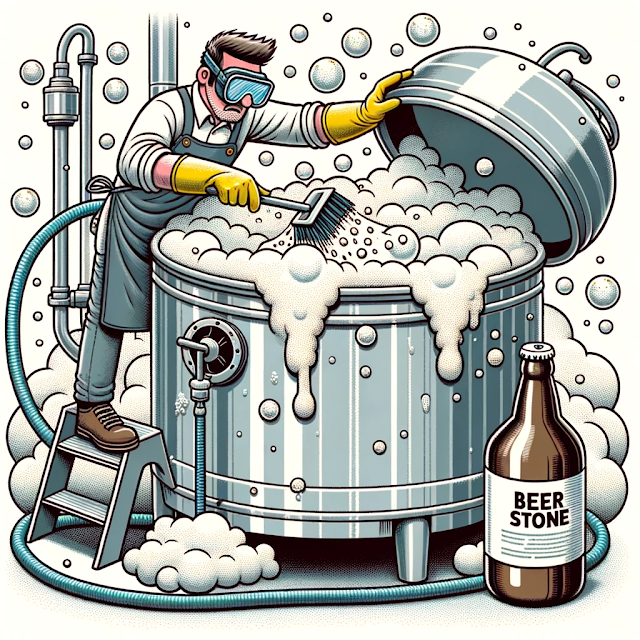
beerstone removal techniques

Safety First: A Non-Negotiable Responsibility

Handling commercial blends of Phosphoric and Nitric acids is not a game. These chemicals will cause severe, irreversible burns to human skin and tissue. When deploying chemical agents to clean your brewing equipment, you must prioritize laboratory-grade safety.

  • Always wear heavy-duty, chemical-resistant gauntlet gloves and full-seal safety splash goggles.
  • Ensure maximum, active ventilation in the brewhouse area when working with hot acids, as the fumes are highly toxic to the lungs.
  • Always add acid to water, never water to acid, to prevent a dangerous exothermic boiling reaction.
  • Execute a massive, thorough fresh water rinse of all equipment after an acid wash to remove any residual chemicals before introducing your next batch of beer.

Beerstone is a chemical inevitability in the brewing process. However, by understanding the molecular mechanics of how it forms, you can easily outsmart it.

With a rigid, two-step alkaline and acid cleaning regimen, proactive water management, and the correct commercial cleaning agents, you can completely eliminate this invisible threat. By maintaining perfectly bare, passivated stainless steel, you absolutely guarantee the production of high-quality, flawless, and biologically stable brews year after year.

Cold Crashing homebrew beer: How to Guide

The Brewer's Guide to Cold Crashing: The Science, Steps, and Secrets to Crystal Clear Beer

For anyone serious about the craft of brewing, the visual presentation of a beer is just as critical as its aroma and flavor. 

We drink with our eyes first. 

When you pour a pint that is muddy, murky, and full of suspended particulate, it immediately sets a negative expectation. Furthermore, that suspended yeast and hop matter does not just look unappealing. 

It actively mutes delicate hop aromas, creates an astringent, chalky mouthfeel, and can lead to digestive discomfort.

Cold crashing has therefore become a mandatory staple in the toolkit of experienced homebrewers and professional cellarmasters alike. It is a highly effective, physically driven method that elevates your beer’s clarity and smoothness. It ensures that what ends up in your glass is as clean, stable, and refined as humanly possible.

Whether you are brewing a crisp, brilliant German lager or a modern, heavily hopped IPA, mastering the thermal shock of a cold crash can be the finishing touch that elevates your homebrew from amateur status to professional quality.

Why Cold Crashing Matters: The Physics of Clarity 🍺

Cold crashing is far more than just a cosmetic vanity step to make your beer look better. It is a fundamental technique for improving overall flavor stability and mouthfeel. By drastically dropping the temperature of the liquid immediately post-fermentation, you leverage specific thermodynamic and physical principles to aggressively clarify your brew.

The entire process is designed to force unwanted dormant yeast cells, leftover hop particles, heavy proteins, and other suspended microscopic matter to drop out of the liquid suspension and compact tightly at the bottom of the fermenter. This physical settling phenomenon is mathematically governed by Stokes' Law.

For those interested in the precise physics, Stokes' Law calculates the settling velocity of a particle in a fluid using the equation $v = \frac{2r^2g(\rho_p - \rho_f)}{9\eta}$. The most critical variable in this equation is $r^2$, which represents the radius of the particle squared. T

he key takeaway here is exponential. As particles get larger, they fall through the liquid dramatically faster.

When you cool the beer down to near-freezing temperatures, you trigger a biological survival response in the yeast. The cells cease all metabolic activity and begin to clump together to conserve energy. 

This process is called flocculation

Because they clump together, their collective radius increases massively. These large, heavy clumps of yeast, dragging hop matter down with them, settle significantly faster than individual, free-floating particles ever could at room temperature.

Furthermore, cold crashing is your absolute best weapon against a frustrating aesthetic flaw known as chill haze

Chill haze is a temporary, frustrating cloudiness that magically appears when a perfectly clear room-temperature beer is chilled down in the fridge for serving. It is caused by specific malt proteins and hop polyphenols forming weak, temperature-dependent hydrogen bonds.

By intentionally crashing the temperature of the entire fermenter before you package the beer, you force all of these microscopic protein and polyphenol bonds to form prematurely. Once they form in the fermenter, they precipitate out and sink into the trub cone. This results in a final packaged beer that remains brilliantly, crystal clear even when served ice-cold in a frosted glass.

Essential Gear for a Successful Cold Crash 🍻

To execute a professional-level cold crash without ruining your hard work, you cannot simply put a bucket outside in the winter snow and hope for the best. You need precise control. Here are the key pieces of equipment required.

A Sealed Fermentation Vessel: Your fermenter must be capable of holding a completely airtight seal. As the liquid cools, the gas inside contracts. If your vessel is not sealed tightly, it will suck ambient, oxygen-rich room air directly into the headspace. Oxygen is the enemy of finished beer.

Active Temperature Control: Relying on ambient weather is a recipe for disaster. A dedicated fermentation refrigerator or a modified chest freezer plugged into an external digital temperature controller (like an Inkbird) is essential. The specific goal is to drive the temperature down and maintain a highly stable, cold environment just above freezing without ever accidentally turning your beer into an ice block.

Precision Thermometers: Do not rely on the internal thermostat of a kitchen fridge. You need an accurate digital thermometer. Ideally, you should use a stainless steel thermowell that plunges deep directly into the center of the liquid. If that is not possible, a temperature probe taped tightly to the side of the fermenter and insulated with a piece of foam will provide an accurate reading of the liquid mass, rather than just the ambient air of the fridge.

Sanitization Tools: As always in brewing operations, immaculate cleanliness is paramount. Ensure you have a spray bottle of acid sanitizer ready for any valves, bungs, or equipment that might contact your beer during this vulnerable phase. Properly sanitized gear is your absolute best defense against a late-stage bacterial infection.

The Cold Crashing Process: A Master Step-by-Step Guide

With your environmental controls locked in and your gear sanitized, here is exactly how to execute the perfect cold crash without introducing oxygen or shocking your yeast.

1. Absolute Confirmation of Fermentation: Cold crashing before fermentation is one hundred percent finished is a catastrophic error. Dropping the temperature will cause the yeast to go dormant prematurely. This leaves you with a cloyingly sweet, under-attenuated beer full of unfermented sugars. Furthermore, if you bottle this sweet beer, the yeast will wake up at room temperature, consume the remaining sugar, and create dangerous bottle bombs. You must use a hydrometer to confirm your specific gravity has remained completely flat and stable for at least three consecutive days.

2. Dialing in the Drop: Set your digital temperature controller to a target range strictly between 0-4°C (32-40°F). Traditional lagers, crisp pilsners, and Kolsch styles benefit heavily from the colder, near-freezing end of this spectrum. Traditional English ales can be crashed slightly warmer. Avoid pushing the temperature below freezing. Freezing the water content of your beer will concentrate the alcohol, potentially damage your plastic or glass vessel due to expansion, and permanently alter the delicate malt flavor profile.

3. The Duration Variable: Time is a critical factor. Most standard-gravity ales will achieve excellent clarity within a short 24 to 48 hours of reaching the target cold temperature. However, for beers carrying a massive sediment load, such as heavily dry-hopped New England IPAs or thick, dark imperial stouts, you must extend this resting period to 72 or even 96 hours. This extra time allows the dense vegetative hop matter to fully sink and compact tightly into the yeast cake.

4. Monitoring and Logging: Do not just walk away. Keep a close eye on your digital controller to ensure the temperature remains perfectly stable and does not undershoot into freezing territory. Diligently logging your timeline, starting temperature, and duration will help you perfectly replicate your successes and refine your chilling technique for all future batches.

Troubleshooting Common Cold Crashing Issues 🧐

Even a relatively simple thermal process can introduce new challenges into the brewhouse. Here is how professional brewers anticipate and handle the most common pitfalls.

The Threat of Oxygen Suck-Back: This is unequivocally the biggest risk of cold crashing. As the headspace gas in your fermenter cools down rapidly, its physical pressure drops significantly, creating a powerful vacuum. 

If you leave a standard liquid-filled airlock in place, this vacuum will forcefully suck the sanitizer liquid, and a massive gulp of oxygen-rich room air, straight back down into your pristine beer. Oxygen will rapidly degrade hop aroma and turn your beer brown.

The Professional Solution: To completely prevent this oxidation, you can replace your bubbling airlock with a sanitized, solid rubber bung once fermentation is confirmed complete. Even better, you can attach a CO₂ capture device like a sanitized mylar balloon filled with CO2 from the active fermentation. 

For advanced keggers, attaching a CO₂ tank with a dual-stage regulator set to a tiny 1 or 2 PSI will maintain positive pressure inside the vessel as the liquid cools. We do appreciate this specific pressurized method is likely a step too far for simple home beer kit brewers, but it is the industry gold standard!

Stubborn Sediment That Refuses to Drop: Sometimes a temperature drop alone is not enough to break a heavy protein haze. If clarity is still an issue after 48 hours at near-freezing temperatures, it is time to deploy fining agents. 

Adding a solution of unflavored gelatin or a liquid product like Biofine directly into the cold beer will electrostatically bind to the stubborn microscopic particles and aggressively accelerate the settling process.

The Danger of Over-Carbonation in Bottles: Over-carbonated, gushing bottles are a common complaint after a cold crash. This is almost always caused by impatience, specifically bottling before the yeast had truly finished their job. Always trust your hydrometer readings over visual airlock cues. 

Furthermore, remember the physics of dissolved gas. Cold liquid holds significantly more residual CO2 than warm liquid. If you are positive fermentation was complete, you may need to slightly lower your priming sugar calculations because the colder, denser beer already contains a higher volume of dissolved carbon dioxide from the fermentation phase.

Post-Crash Protocol: Flawless Packaging and Conditioning 🍾

Once the cold crash timeline is complete and the beer looks brilliantly clear, you must handle the vessel with extreme care. The compacted trub at the bottom is delicate.

The primary goal here is a gentle, totally oxygen-free transfer to your final bottles or a stainless steel keg. Use a sanitized auto-siphon and position the intake tip very carefully just above the solid yeast cake. 

Do not be greedy. 

It is far better to sacrifice the last half-inch of beer in the fermenter than to accidentally suck up the bitter, muddy sediment you just spent three days working so hard to settle out.

Next comes the conditioning phase, where the packaged beer matures and develops its final, polished character. Lighter, delicate styles like Munich Helles or Czech lagers may need several weeks of continuous cold conditioning (known properly as lagering) to become perfectly smooth and integrated. 

Conversely, heavier, dark styles like imperial stouts can also benefit greatly from extended cellar conditioning time to mellow out complex roasted flavors and hot alcohol notes.

Finally, if you are a bottle brewer, always store your finished bottles upright. This ensures any remaining trace amounts of yeast needed for bottle conditioning will settle firmly at the very bottom of the glass, allowing you to pour a clean, commercially clear pint while leaving the dregs behind.

Always keep your finished beer in a cool, totally dark place to prevent ultraviolet light exposure. UV light reacts instantly with isomerized alpha acids from the hops in a photochemical reaction that causes "skunking." 

Skunking is a fatal chemical fault that smells exactly like a defensive spray from a skunk, and you must avoid it at all costs by keeping your beer away from sunlight and fluorescent bulbs.

Advanced Techniques and Chemical Finings ✨

To achieve the ultimate, polished clarity worthy of a commercial taproom, adding chemical fining agents is an absolute game-changer when combined with a cold crash.

Agents like standard grocery store gelatin or commercial vegan alternatives like Biofine Clear operate on the principles of electrostatic charge. Gelatin, for example, carries a strong positive charge. Yeast cells and many haze-causing proteins carry a negative charge. When you introduce liquid gelatin into cold beer, it acts like a massive chemical magnet.

 It instantly binds to the yeast, creating heavy, dense floccules that drastically obey Stokes' Law, dragging all the haze safely to the bottom of the fermenter in a matter of hours.

However, a true master knows that not all beer styles require the same aggressive treatment. Technique must match the recipe.

For a juicy, modern hazy IPA or a traditional German Hefeweizen, a hard, freezing cold crash combined with gelatin will completely strip away the desirable, stylistic haze that actively contributes to its soft flavor and pillowy mouthfeel. For these specific styles, you should execute a "soft crash." 

This involves only dropping the temperature to a much warmer 10°C (50°F). This warmer temperature is just cold enough to settle out the heavy, harsh hop particulates and dead yeast, while successfully preserving the beautiful, permanent protein haze in suspension.

In stark contrast, for a delicate pilsner or a crisp West Coast IPA where brilliant, gem-like clarity is aesthetically paramount, a full, near-freezing hard cold crash backed up by gelatin finings is an absolute necessity.

Cold Crashing vs. Other Clarification Methods 🍻

Cold crashing is an incredibly powerful, low-cost physical tool for achieving brilliant clarity. However, to be a complete brewer, it is essential to understand its specific place within the broader spectrum of commercial clarification techniques. 

The right choice for your brewery depends entirely on your specific gravity goals, the beer style you are brewing, your equipment budget, and your production timeline.

Let us take a deeper, professional dive into how basic cold crashing compares to the other primary industrial methods of clearing beer.

Mechanical Filtration

The Mechanism: Filtration is a purely physical, forceful process. Cold beer is forcefully pushed by CO2 pressure or a specialized pump through a porous filter medium, such as a lenticular cartridge or a plate frame, with a highly specific micron rating. This physically blocks and strips out suspended particles like yeast cells, large proteins, and vegetative hop particulates.

A standard 5-micron filter will remove the vast majority of yeast, while a tight 1-micron filter provides a brilliant, commercial-level "polish."

The Pros: The primary advantage is sheer speed. Mechanical filtration is almost instantaneous. It can take a muddy, dry-hopped beer from completely cloudy to crystal clear in the exact time it takes to transfer the liquid from one stainless keg to another. In contrast, gravity-based cold crashing requires a minimum of 1 to 3 days of patience. 

Additionally, filtration can achieve an absolute, polished brilliance that is incredibly difficult to replicate with gravity and temperature alone.

The Cons: The barriers to entry are high. Cost and physical complexity make this a difficult proposition for most homebrewers. It requires dedicated, sanitizable equipment like stainless filter housings, expensive single-use cartridges, braided tubing, and often a diaphragm pump. More importantly, fine filtration is chemically indiscriminate. Pushing beer through tight paper can actively strip out highly desirable hop oils, reducing aroma. 

It can also strip proteins that contribute to a full mouthfeel and stable foam retention. 

Finally, pushing beer through a complex filter system creates a massive, terrifying opportunity for severe oxygen exposure if the system is not perfectly purged with CO2 beforehand.

The Verdict: While undeniably effective, mechanical filtration is generally considered overkill for the vast majority of homebrewers. It is best suited for advanced brewers who are deeply dedicated to producing perfectly brilliant American Light Lagers, and who already possess the advanced kegging equipment and strict purging expertise required to manage the high risk of catastrophic oxidation.

Extended Conditioning (Traditional Lagering)

The Mechanism: This ancient, traditional method relies entirely on time and gravity. By carefully holding a finished beer at near-freezing temperatures (typically 0-4°C or 32-40°F) for several weeks or even months, microscopic particles like yeast and proteins are given a very long, undisturbed timeline to settle naturally out of the liquid. This is essentially a very slow, prolonged, and gentle cold crash.

The Pros: The most critical benefit of traditional lagering is not actually just clarity, but deep flavor maturation. Over this extended cold period, the small amount of remaining yeast continues to slowly work. They clean up harsh fermentation byproducts like diacetyl, which tastes like artificial butter, and acetaldehyde, which tastes like green apples. This slow biological cleanup results in an exceptionally smooth, crisp, and beautifully integrated flavor profile that a quick 48-hour cold crash simply cannot produce. Furthermore, it is incredibly simple. No extra mechanical steps or additives are required beyond maintaining a stable cold environment and having the discipline to be patient.

The Cons: The primary drawback is the massive time commitment. While a chemical cold crash achieves remarkable visual clarity in mere days, true lagering takes many weeks or entire seasons. This deeply impacts your production schedule. Your beer will occupy a fermenter and take up highly valuable real estate in your temperature-controlled chamber for a very long time, essentially halting your brewing pipeline until the tank is empty.

The Verdict: Extended conditioning is a holistic maturation process, not just a clarification technique. It is absolutely essential for traditional lagers, Baltic porters, and hybrid styles where flavor smoothing and biological cleanup are just as important as visual clarity. For these specific beers, a sudden cold crash is simply the first step within the much longer, slower lagering journey.

Clarifying Agents (Chemical Finings)

The Mechanism: As discussed, finings are specialized additives that work through complex electrostatic charges. They bind with freely suspended particles in the beer to create much larger, heavier clumps called floccules. Because they are heavier, they settle out of the liquid exponentially faster. Finings are best utilized as a chemical booster for your gravity-based cold crash, not as a replacement for it.

Professional brewers use a two-step approach. First, they use kettle finings like Irish Moss or Whirlfloc tablets. These are added directly to the boiling kettle during the last 15 minutes. These negatively charged carrageenan products derived from seaweed aggressively bind with positively charged malt proteins in the hot wort. 

This creates a thick, fluffy "hot break" that settles in the kettle, removing potential haze-forming proteins before the liquid even reaches the fermenter. 

Second, they deploy post-fermentation finings like Gelatin or silica gel directly into the cold crashing tank to drop the remaining yeast.

The Pros: Fining agents offer incredible synergy with cold crashing. By chemically creating larger, heavier particles, they dramatically accelerate the natural sedimentation process dictated by Stokes' Law. They make your cold crash significantly faster and visually more effective. Additionally, they offer targeted action. You can deliberately choose a specific agent that targets exactly what is making your beer hazy, whether you need to drop out yeast or strip out a stubborn protein haze.

The Cons: There are notable dietary and allergen considerations. Many of the most popular and effective traditional finings are animal-derived. Standard gelatin comes from animal collagen, isinglass is derived from the swim bladders of fish, and chitosan is made from crushed shellfish. This makes them entirely unsuitable for brewing vegan or allergy-friendly beers. Furthermore, while they are far gentler than mechanical filtration, the heavy overuse of certain finings can potentially strip out some of the delicate compounds required for good mouthfeel and dense head retention.

The Verdict: Thoughtfully deploying targeted fining agents is one of the single best, most cost-effective ways to elevate your cellar game. Combining a preventative kettle fining during the boil with a reactive post-fermentation agent like gelatin during the cold crash provides a powerful, scientifically sound approach. It reliably yields exceptionally clear, commercial-quality beer without the immense financial cost and oxidation risks of mechanical filtration.

Back to Top