
Beerstone is one of those brewing problems that looks harmless until it starts ruining beer. It can appear as a dull white haze, a tan film, a rough mineral patch, or a stubborn crust inside kettles, fermenters, kegs, beer lines, taps, and valves.
```It is not ordinary dirt.
It is not just dried yeast.
It is a mineral deposit, mostly calcium oxalate, often bound together with protein, hop resin, yeast residue, and other brewing soils.
That is what makes beerstone so irritating. You can scrub it. You can rinse it. You can hit it with sanitizer. It may still sit there, rough and chalky, giving microbes a place to hide and giving your next batch a problem before fermentation has even started.
The fix is not brute force. The fix is understanding what beerstone is, how it forms, and which cleaning chemistry actually removes it.
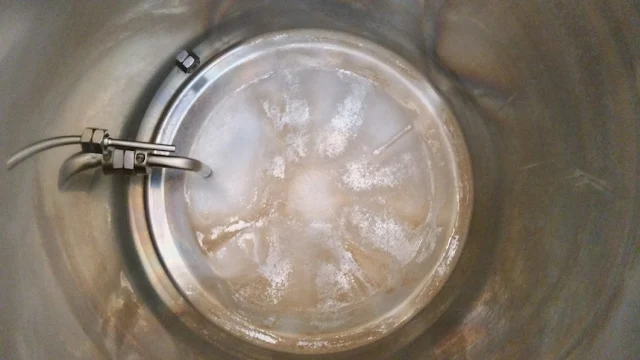
What Beerstone Looks Like
Beerstone usually appears as a white, grey, yellow, tan, or brownish film. In early stages it may look like a cloudy patch on stainless steel. In worse cases it becomes rough, crusty, and firmly attached to the surface.
The easiest clue is resistance. Yeast residue, sugar film, and most hop grime usually soften after a proper hot alkaline clean with a brewery cleaner such as PBW. Beerstone tends to remain because the mineral portion is not mainly organic soil. It is a low-solubility mineral deposit.
It can form in obvious places, such as kettles and fermenters, but the hidden areas are often more dangerous. Keg posts, poppets, beer taps, racking arms, dip tubes, ball valves, bottle fillers, transfer lines, and plate chillers can hold beerstone long after the visible tank wall looks clean.
Quick Test
If the residue feels greasy, sticky, or soft after soaking, it is probably organic brewing soil. If it feels chalky, rough, or mineral-like and survives a normal alkaline clean, beerstone or hard water scale is more likely.
What Beerstone Actually Is
Beerstone is mainly calcium oxalate. In simple terms, calcium from brewing water and malt reacts with oxalate from malt. When those ions meet under the right brewing conditions, they form calcium oxalate, a mineral salt with very low solubility in water.
The simplified reaction looks like this:
The calcium ion, Ca2+, comes from brewing water, malt, and brewing salts. The oxalate ion, C2O42-, comes largely from malted grain. Once calcium oxalate forms, it can fall out of solution and attach to brewing surfaces.
In real brewing equipment, beerstone is rarely pure calcium oxalate. It usually forms as a mixed deposit. Protein, hop resin, yeast residue, polyphenols, trub, and other organic material can help bind the mineral crystals to stainless steel, plastic, rubber, and beer-line surfaces.
This is why beerstone removal usually needs two kinds of cleaning. Alkaline cleaners help remove organic soil. Acid cleaners help dissolve mineral scale. Sanitizer comes after cleaning. It does not replace cleaning.
The Conditions That Cause Beerstone
Beerstone is not random. It forms when the chemistry, temperature, and surface conditions are right. Some brewers see it rarely. Others fight it constantly because their water, process, or cleaning routine encourages scale formation.
Hard Water
Hard water contains higher levels of calcium and magnesium. Calcium is useful in brewing. It helps with mash enzyme performance, yeast flocculation, hot break formation, and beer clarity. Too much unmanaged hardness, however, can increase mineral deposits in vessels, kegs, taps, and lines.
If beerstone keeps returning, do not simply increase cleaner strength and hope for the best. Look at your water profile. If your water is very hard, consider diluting with reverse osmosis water and rebuilding your brewing salts more deliberately.
Malt-Derived Oxalate
Malted barley naturally contributes oxalate. That does not make malt a problem. It simply means every batch gives beerstone the raw material it needs. High-grain bills, repeated brewing, and poor cleaning after wort contact can gradually build deposits, especially where liquid dries onto the surface.
Heat and Evaporation
Hot surfaces encourage deposits because water evaporates and dissolved material becomes more concentrated. Kettles, heating elements, heat exchangers, and hot-side fittings are common beerstone zones. A plate chiller can be especially awkward because the narrow internal passages are difficult to inspect and easy to neglect.
Wet and Dry Cycles
Repeated wetting and drying makes mineral deposits harder. A small haze left after one batch becomes a tougher layer after the next. This is one reason delayed cleaning causes trouble. Letting wort, beer, or yeast residue dry inside equipment gives the mineral and organic layers more time to cling.
Scratched or Rough Surfaces
Beerstone attaches more easily to rough surfaces. Scratches in stainless steel, damaged plastic, worn beer line, old rubber parts, and valve threads all create grip points for mineral deposits and microbes.
Beerstone Compared with Other Brewing Deposits
Not every white or brown mark is beerstone. Before choosing a cleaner, it helps to know what you are dealing with.
| Deposit | What it looks like | Main cause | Best cleaning approach |
|---|---|---|---|
| Beerstone | White, grey, tan, yellow, or brown mineral film. Often rough or chalky. | Calcium oxalate bonded with brewing residues. | Alkaline clean, rinse, then acid beerstone remover. |
| Hard water scale | Chalky white mineral deposit. | Calcium carbonate and other water minerals. | Acid cleaner suitable for brewing equipment. |
| Protein and hop film | Sticky, greasy, brown, greenish, or resinous residue. | Wort protein, hop oils, trub, yeast, and dried krausen. | Hot alkaline cleaner such as PBW. |
| Biofilm | Often invisible, sometimes slippery or dull. | Microbial growth on poorly cleaned surfaces. | Proper cleaning first, then sanitizing. |
The Risk to Beer Quality
Beerstone is not only cosmetic. It creates rough, protected surfaces where spoilage organisms can survive. A clean-looking fermenter or keg may still have tiny mineral pockets that protect bacteria and wild yeast from normal sanitation.
This is one of the reasons a brewer can sanitize carefully and still get recurring infection problems. Sanitizer works best on already-clean surfaces. If microorganisms are hiding under mineral scale, sanitizer may not reach them properly.
Beerstone can also contribute to off-flavors and inconsistency. Deposits in beer lines, taps, and kegs may hold old beer residues. That can create stale, sour, buttery, phenolic, or generally muddy flavors depending on what organisms or residues are present.
There is also a physical effect. Rough mineral patches can act as nucleation sites for carbon dioxide. In kegs and bottles, that can encourage foaming, gushing, and inconsistent pours. If the beer tastes fine but pours like a disaster, dirty lines, scale, and rough hardware should be part of the investigation.
For more on spotting infection problems, see this guide to how to tell if your beer is infected. For chemical treatment in brewing and wine contexts, this article on Campden tablets is also useful background, although Campden tablets are not a beerstone remover.
The Correct Cleaning Logic
The best way to think about beerstone removal is simple: clean first, descale second, sanitize last.
Alkaline cleaners remove organic brewing soil. That means yeast, protein, hop resin, trub, fatty residues, and biofilm. Acid cleaners remove inorganic mineral scale. That includes beerstone and hard water deposits. Sanitizers reduce microbial load on clean surfaces before use.
Those jobs should not be blurred together. Sanitizer does not clean. Acid does not replace a full organic clean. Alkaline cleaner does not always remove mineral scale. Each product has a job.
Cleaning Order Matters
For most homebrewers, the safest routine is alkaline clean, rinse, acid clean, rinse, then sanitize before the next use. This removes organic soil first, then gives the acid cleaner direct access to the mineral layer.
Some commercial beerstone removers use a different sequence, including acid followed by a non-caustic alkaline cleaner. Follow the product label. Do not mix acid and caustic products. Do not invent your own chemical sequence.
A Practical Beerstone Removal Method for Homebrewers
This process suits fermenters, kettles, kegs, taps, stainless parts, and most brewery-safe hardware. Always check cleaner labels for concentration, contact time, temperature range, and material compatibility.
1. Rinse loose soil immediately
As soon as the beer, wort, or yeast is drained, rinse the vessel with warm water. Do not let krausen, trub, or sticky wort dry onto the surface. Fresh soil is easy to remove. Dried soil becomes a bonding layer for mineral deposits.
2. Run a hot alkaline clean
Use PBW or another brewery-safe alkaline cleaner at the recommended rate. Warm to hot water improves cleaning power, but do not exceed the product’s instructions. Soak, recirculate, or scrub gently with a non-abrasive cloth or pad.
3. Rinse thoroughly
Rinse until the surface no longer feels slippery and the rinse water runs clean. This step matters because leftover alkaline cleaner can interfere with acid cleaning and can create unsafe reactions if incompatible chemicals meet.
4. Use an acid cleaner for the mineral layer
Apply a brewery acid cleaner or dedicated beerstone remover. Products based on phosphoric acid, nitric acid, or blended brewery acids are commonly used for mineral deposits. Dedicated beerstone removers may also include surfactants and chelating agents that help lift calcium-based scale.
5. Give the cleaner enough contact time
Do not splash acid cleaner around for thirty seconds and expect miracles. Beerstone removal takes contact time. Follow the label. Keep the surface wet for the full recommended period. For kegs and lines, circulation is often better than a static soak.
6. Disassemble hidden parts
Take apart keg posts, poppets, taps, bottling wands, dip tubes, racking gear, and ball valves. Beerstone often survives in threads, seals, and internal passages. A shiny fermenter wall means little if the valve is still carrying old mineral scale.
7. Rinse, dry, and inspect
After the acid step, rinse according to the product label. Let stainless steel dry fully before storage. Inspect under good light. A clean surface should look even and feel smooth, not chalky, gritty, or cloudy.
8. Sanitize only before brewing or packaging
Sanitize before the next use. Do not treat sanitizer as a storage solution or a cleaning shortcut. Sanitizer is the final step after proper cleaning, not the thing that saves a dirty surface.

Cleaning Kettles, Fermenters, Kegs, and Beer Lines
Kettles
Kettles collect hot-side deposits because wort is heated, concentrated, boiled, and splashed against metal surfaces. Beerstone can form around heating elements, welds, pickup tubes, sight glasses, and areas where wort dries after the boil.
Rinse the kettle soon after use. Run a hot alkaline clean to remove protein and hop residue. If a dull mineral film remains, use an acid cleaner. Avoid abrasive pads that scratch stainless steel, because scratches make the next deposit easier to anchor.
Fermenters
Fermenters collect krausen rings, yeast film, dry hop residue, and beerstone. The krausen ring is mostly organic soil, so alkaline cleaning is the first move. Any chalky haze that survives may need an acid step.
Pay close attention to taps, racking arms, thermowells, sample valves, lids, seals, and threaded fittings. These small parts are often more contamination-prone than the main vessel wall.
Kegs
Kegs are major beerstone traps because beer sits in them for weeks or months. The inside walls may look clean, while dip tubes, posts, poppets, and liquid disconnects hold scale and old beer residue.
Break kegs down regularly. Clean with an alkaline cleaner, rinse, then use an acid cycle when mineral deposits are suspected or as part of scheduled maintenance. Replace worn O-rings and damaged seals. Old rubber can hold flavor and contamination even after cleaning.
Beer Lines and Taps
Beer lines are easy to neglect because you cannot see inside them. That is exactly the problem. Beerstone, yeast residue, hop compounds, and biofilm can form inside lines and taps, giving every pour a stale or sour edge.
Use beer line cleaner as directed. Periodically use an acid line cleaner where suitable. Pull taps apart for manual cleaning. If lines are old, stained, stiff, or carrying flavor, replacing them is often cheaper and smarter than trying to rescue them forever.
Best Prevention Methods
Clean before deposits dry
The best beerstone removal method is preventing the first layer from setting. Rinse equipment while residues are still soft. Do not leave a fermenter with a dried krausen ring for days. Do not leave kegs sitting with dregs and foam inside them. Do not let wort dry inside the kettle overnight unless you enjoy punishment.
Use both alkaline and acid cleaning
A brewer who only uses alkaline cleaner may remove organic grime while leaving mineral scale behind. A brewer who only uses acid may attack minerals while leaving organic soil in place. The better routine uses both, at sensible intervals.
For normal homebrewing, every batch does not always need a heavy acid clean. But if you brew often, use hard water, keg regularly, or see recurring haze and rough patches, scheduled acid cleaning is worth adding to the routine.
Manage water hardness
If beerstone is a constant issue, check your water profile. Hard water brings more calcium and magnesium into the system. Calcium still has brewing value, so the goal is not automatically zero calcium. The goal is control.
Reverse osmosis water gives you a cleaner starting point. From there, you can build the profile with measured additions of calcium chloride, calcium sulfate, magnesium sulfate, or other brewing salts depending on the style. Guesswork is where problems begin.
Keep stainless steel smooth
Do not use steel wool inside brewing vessels. Do not attack stainless steel with harsh abrasives. Do not use rough pads unless they are rated for brewery stainless. Scratched stainless gives beerstone and microbes more surface area to grip.
If you need mechanical help, use soak time first, then a soft cloth or brewery-safe cleaning pad. Let chemistry do the hard work.
Disassemble equipment on a schedule
Valves, taps, keg posts, disconnects, and transfer hardware should not be treated as permanently clean because liquid passed through them. Flow is not cleaning. A line or valve can carry beer while still holding mineral scale and old residue in hidden corners.
Dry equipment before storage
Standing moisture helps deposits and corrosion. After cleaning and rinsing, drain equipment properly and allow it to dry. Store kegs, fermenters, and fittings so they do not trap puddles.
Common Beerstone Mistakes
- Relying on sanitizer to fix dirty equipment. Sanitizer is not a cleaner and will not dissolve beerstone.
- Using only alkaline cleaner forever and wondering why a white mineral haze remains.
- Using only acid cleaner without first removing yeast, protein, hop resin, and dried krausen.
- Mixing acid and caustic products. Rinse between incompatible cleaners unless a manufacturer gives a specific controlled process.
- Scrubbing stainless steel with steel wool or harsh abrasives.
- Ignoring beer lines, taps, keg posts, poppets, dip tubes, and valves.
- Letting wort, beer, or yeast residue dry before cleaning.
- Assuming every white deposit is beerstone without considering hard water scale or cleaner residue.
Safety Rules for Beerstone Removal
Acid cleaners and caustic cleaners deserve respect. You do not need to be scared of them, but you do need to use them properly.
- Wear chemical-resistant gloves when handling strong cleaners.
- Use full eye protection. Normal glasses are not splash goggles. For suitable eye protection, see this guide to safety glasses.
- Work in a ventilated area, especially with hot cleaning solutions.
- Follow the manufacturer’s dilution rate and contact time.
- Never mix acid cleaners with caustic cleaners.
- If diluting concentrated acid, add acid to water, not water to acid.
- Avoid chlorine bleach on stainless steel brewing equipment. It can contribute to corrosion and pitting.
- Keep all cleaners away from children, pets, food surfaces, and unlabelled containers.
- Do not seal a vessel tightly during hot chemical cleaning. Pressure and fumes need safe handling.
Routine Maintenance Schedule
A simple schedule prevents most beerstone problems before they become stubborn.
| Equipment | After every use | Periodic maintenance |
|---|---|---|
| Kettle | Warm rinse, alkaline clean, gentle wipe, full rinse. | Acid clean when mineral haze appears or after several batches with hard water. |
| Fermenter | Rinse quickly, alkaline clean, remove krausen ring, rinse and dry. | Acid clean if chalky film remains. Disassemble valves and seals. |
| Keg | Rinse dregs, alkaline clean, rinse and drain. | Break down posts and dip tubes. Acid clean regularly if beerstone appears. |
| Beer lines | Flush after use where practical. | Use beer line cleaner, acid line cleaner where suitable, and replace old lines. |
| Taps and fittings | Rinse and clean exposed parts. | Disassemble, soak, brush gently, inspect threads and seals. |
Beerstone Removal Checklist
- Rinse equipment before residues dry.
- Use a hot alkaline cleaner to remove organic brewing soil.
- Rinse thoroughly before using acid.
- Use a brewery-safe acid cleaner or dedicated beerstone remover for mineral scale.
- Follow dilution, temperature, and contact time instructions.
- Disassemble valves, taps, keg posts, poppets, and dip tubes.
- Inspect surfaces under good light.
- Dry equipment before storage.
- Sanitize only before the next use.
- Review your water hardness if beerstone keeps coming back.
The Clean Surface Is the Goal
Beerstone is a chemistry problem, not a character test. If it keeps coming back, the answer is not harder scrubbing. It is better process.
Use alkaline cleaners for organic soil. Use acid cleaners for mineral scale. Rinse between incompatible products. Keep equipment smooth, dry, and disassembled often enough that hidden deposits do not become permanent residents.
Once that routine is in place, beerstone stops being a mysterious white crust at the bottom of the brewing nightmare. It becomes just another maintenance problem with a clear cause, a clear removal method, and a clear prevention plan.
Always follow the safety directions and material compatibility advice printed on any brewing cleaner, sanitizer, acid wash, caustic wash, or beer line cleaner you use.

